Entry · Ref QIESYABJ
Why LeStallion Journals and Notebooks Bring Purpose Back to Daily Writing
- Posted
- 2026-10-18
- Last amended
- 2026-10-18
- Account
- @lestallionjournalscentral
A Notebook That Does More Than Collect Dust
I have owned dozens of notebooks over the years. Some were gifts, some were impulse buys from stationery shops, and a few were expensive leather-bound things I was almost afraid to write in. Almost all of them ended up half-used, with the first few pages filled and the rest left blank. The problem was never the paper or the binding. It was that none of them gave me a reason to keep going. They were passive objects, pretty containers for thoughts I never returned to. That changed when I started using LeStallion journals and notebooks. The difference was not in the materials alone, though those are excellent. It was in how the design made me want to write, plan, and reflect every single day.
Most people I talk to have the same story. They buy a notebook with big ambitions. They start a bullet journal or a gratitude log or a dream diary. Then life gets busy, the habit breaks, and the notebook goes on a shelf. The guilt of an unfinished journal can be surprisingly heavy. It feels like evidence that you lack discipline. But the truth is simpler: most notebooks are not built to sustain a habit. They are built to look good on a desk. LeStallion journals and notebooks are different because they are designed around the act of writing itself, not around the look of a closed cover.
What Makes a Journal Actually Useful
A good journal should do three things. It should invite you to start, keep you moving through the pages, and make it easy to find what you wrote later. That sounds obvious, but very few notebooks manage all three. The paper needs to be smooth enough that your pen glides without bleeding through, but not so slick that ink sits on top and smears. The binding needs to lie flat so you can write near the spine without fighting the curve. The pages need a structure that guides you without boxing you in. LeStallion journals and notebooks get these fundamentals right. The paper is thick and fountain-pen friendly. The stitching holds up to being opened and closed repeatedly. And the page layout includes subtle prompts that help you organize your thoughts without feeling like a worksheet.
One feature I have come to rely on is the index page at the front. It sounds minor, but being able to number pages and log topics as you go turns a chaotic notebook into a reference tool. You can flip back to notes from three months ago and actually find what you need. That small design choice has saved me hours of frustration. Another detail is the bookmark ribbon sewn into the spine. It stays put and does not slip out the way a loose ribbon does. These are not flashy features. They are the kind of practical decisions that only come from someone who actually uses a notebook every day.
Writing as a Productivity Tool, Not a Chore
Productivity advice often focuses on apps, timers, and complex systems. But the most effective tool I have found is still pen and paper. Writing something down forces a kind of clarity that typing does not. You cannot delete and rewrite as easily, so you think before you write. You cannot open a dozen tabs, so you stay on one task. The physical act of moving a pen across paper also helps memory retention in a way that tapping keys does not. When I write a task in a LeStallion notebook, I remember it better than when I type it into a phone app. That is not nostalgia. It is neuroscience. The motor engagement and the spatial layout of the page create stronger mental cues.
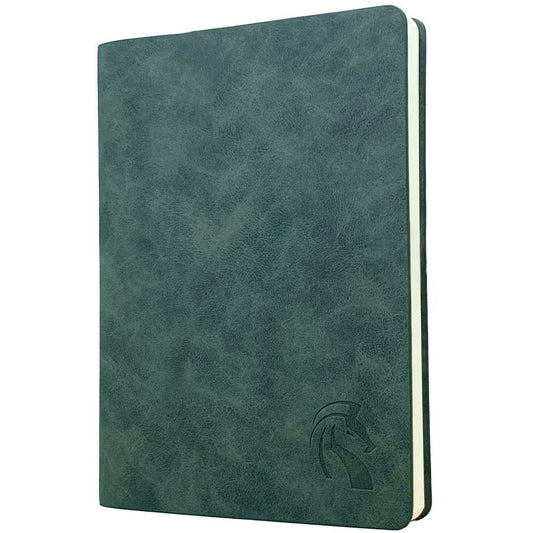
But the real productivity gain comes from the structure of the journal itself. Many LeStallion notebooks include a daily planning section with space for priorities, notes, and a small reflection. That reflection part is easy to skip, but it is where the real value lives. Taking two minutes at the end of the day to write what worked and what did not turns a simple notebook into a personal feedback loop. Over time, you start to see patterns. You notice that you are more focused on days when you write down three priorities instead of ten. You realize that certain meetings always drain your energy. That awareness is hard to get from a digital calendar. It comes from the slow, honest act of writing by hand.
Trade-Offs and Honest Comparisons
No notebook is perfect for everyone. LeStallion journals are on the higher end of the price range for a paper journal. You can buy a pack of basic spiral notebooks for a fraction of the cost. And for some people, a cheap notebook is the right choice. If you write a few pages and toss it, a premium journal is wasted. But if you want a book that you will keep, revisit, and maybe hand down, the cost becomes an investment. The paper quality, the binding, and the design hold up over years. I have a LeStallion notebook from two years ago that still opens flat and shows no wear at the spine. My cheaper notebooks from the same period have loose pages and cracked covers.
Another trade-off is the size. LeStallion offers a few formats, but the most popular is roughly A5. That is a comfortable size for carrying in a bag and writing on a desk. It is too big for a pocket and too small for a full meeting pad. If you need something to slip into a jeans pocket, this is not it. But for daily carry in a work bag, it hits the sweet spot. The cover is sturdy enough to protect the pages without adding much weight. I have taken mine on flights, to coffee shops, and on hikes. It shows some scuffs, which I actually like. A beat-up notebook cover tells a story.
How to Build a Writing Habit That Lasts
Owning a great notebook does not automatically make you a daily writer. The habit still needs to be built. Here are a few strategies that have worked for me and for others I have coached.
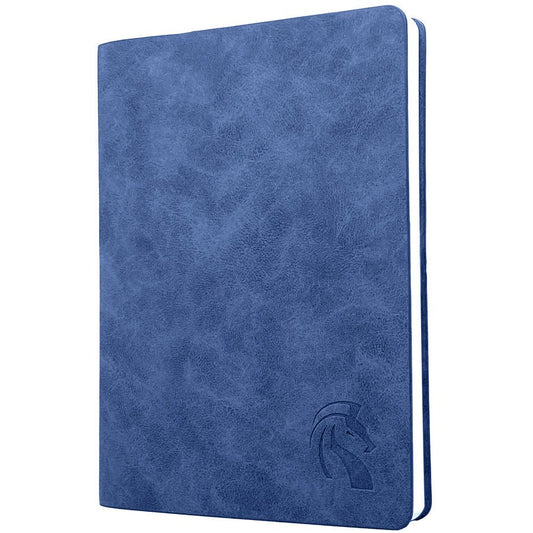
- Keep the notebook in a visible, fixed place. Do not bury it in a drawer. Leave it on your desk or beside your bed. Out of sight means out of mind.
- Write at the same time each day. Morning works for planning. Evening works for reflection. Pick one and stick to it for two weeks before adjusting.
- Lower the bar. One sentence counts. One word counts. The goal is to open the notebook, not to produce a masterpiece. Momentum matters more than content.
- Use the built-in prompts. If your LeStallion journal has a "today's priority" line, fill it. If it has a "notes" section, use it. The structure is there to help, not to constrain.
- Review old entries once a month. Flip back through the pages and notice what you wrote. This is where the real insight comes from. Patterns emerge that you cannot see day to day.
These tactics are simple, but they work because they remove the friction of deciding what to do. The notebook is already there. The pen is already there. The only decision left is to write.
Why Paper Still Wins for Deep Thinking
I use digital tools for many things. Calendars, task managers, and note apps are great for searching and sharing. But for thinking, I still reach for paper. The reason is focus. A screen is a portal to everything. A notebook is a portal to nothing but what you put in it. That limitation is a superpower. When I am in a meeting and I open a LeStallion notebook, I am telling my brain that this moment matters. I am not going to check email or browse social media. I am going to listen and write. That simple signal changes how I show up.
There is also something about the permanence of ink. When you type, you can edit endlessly. When you write by hand, you commit. Mistakes stay visible. Crossed-out words and messy margins become part of the record. That honesty is valuable. It reminds you that progress is not linear. It shows you the rough drafts of your own thinking. Years later, looking back at a page full of crossed-out plans and scribbled ideas, you see the struggle behind the success. That is hard to replicate in a clean digital file.
Choosing the Right Journal for Your Needs
LeStallion offers a few variations, but the core design is consistent. If you are deciding between them, think about how you write. Do you prefer lined pages for structured notes? Do you want dotted pages for sketching and layouts? Do you need a lay-flat binding for writing on both sides? These questions matter more than the cover color. Pick the format that matches your natural style, not the one that looks best on Instagram. A notebook you actually use is more beautiful than a notebook that stays pristine on a shelf.
I have tested several brands over the years, and I keep coming back to LeStallion journals and notebooks because they balance quality with usability. They feel substantial without being precious. They encourage writing without demanding perfection. That is a rare combination. If you are tired of half-finished notebooks and want a tool that actually supports your productivity, give one a real try. Not a casual try. Use it for a month. Fill the first twenty pages. See if the habit sticks. For most people, the design makes the difference.